
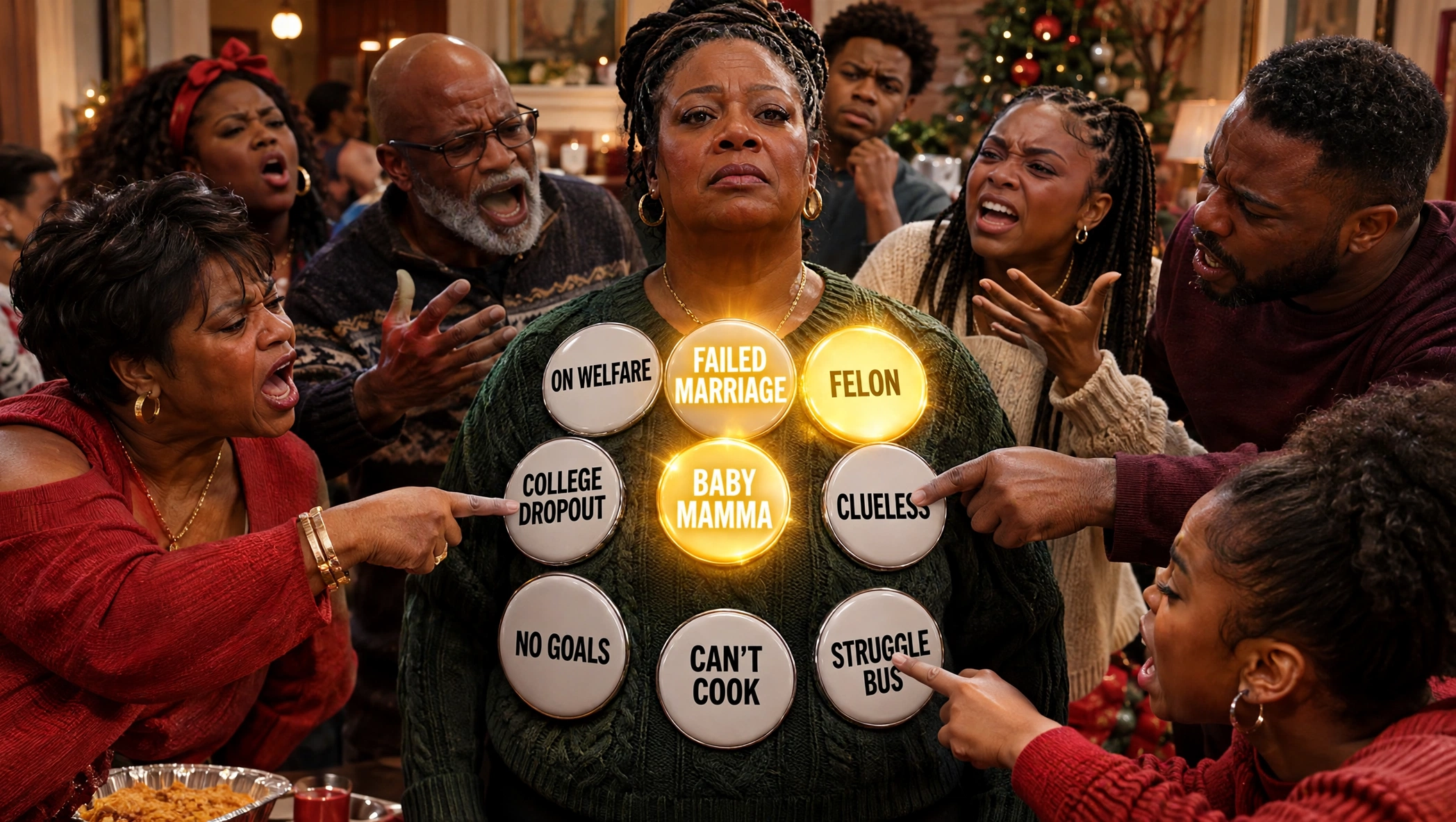
Have you ever noticed how you can be a fully grown adult, with a career, responsibilities, bills in your name, and plenty of life experience, yet one comment from a family member can make you feel like you're fifteen years old again?
You're at the holiday table, enjoying yourself, when somebody brings up that one story. You know the one. The story you've heard a hundred times, the one you've spent years trying to outgrow. Suddenly, your tone changes, your patience disappears, and you're ready to say something you promised yourself you wouldn't say this year.
I've seen this happen in families, workplaces, and leadership environments. And I've learned that sometimes the most important work we can do is understand what gets activated in us before we respond.
Some Roles Are Harder to Outgrow Than Others
When we were growing up, there were certain things we called fighting words. You knew exactly which buttons to push if you wanted a reaction. Sometimes, you didn't even need words. A look, a nickname, or a reminder of something embarrassing was enough.
Somewhere along the way, we grew up. We outgrew the toys, the clothes, and many of the behaviors we once thought were perfectly acceptable.
But here's something worth considering: We sometimes outgrow the behavior without outgrowing the role.
You return to a familiar family environment, and suddenly you're the baby, the difficult one, the sensitive one, or the person who always overreacts.
And if you're not careful, you'll start performing a role you retired years ago.
I've observed similar patterns throughout my career in human resources and leadership development. An employee gets labeled difficult. A manager becomes known as the one who never listens. A team member is continually treated as though their past mistakes define their present contributions.
Those labels can follow people into rooms where they are trying to grow.
The question becomes: Are we responding to the person in front of us today, or are we responding to the history we've attached to them?
The Space Between the Button and the Response
Self-insight begins when we recognize that something has been triggered without automatically allowing that feeling to determine what happens next.
Think about it. Fifteen-year-old you might have reacted immediately. Somebody said something, and you were ready. No pause. No reflection. Just a response.
But the person you've become has another option.
You can hear the familiar comment, recognize the familiar feeling, and take a moment to consider what's really happening.
Is this about what someone just said? Is it connected to an old experience? Am I responding to the present situation, or am I defending a version of myself that I no longer need to be?
The feeling may be familiar, but that doesn't mean the response has to be.
This is especially important in the workplace. Crucial conversations require us to recognize our assumptions, understand our emotional responses, listen beyond our initial reactions, and communicate with intention.
Through leadership development and coaching, I encourage individuals to examine these patterns. When we become more aware of what we bring into a conversation, we become better equipped to navigate conflict, build trust, and lead with greater intention.
Are You a Thermometer or a Thermostat?
I love this comparison because it makes the point so clearly.
A thermometer simply reports the temperature of the room. If the room gets hot, the thermometer reflects that heat.
A thermostat, however, helps determine what the temperature will be.
Consider what that means for your relationships.
If someone walks into your home with an attitude, do you automatically match it? If a colleague challenges your work, does your entire demeanor change? If someone brings up an old disagreement, does your mood immediately follow?
Or can you recognize what's happening without allowing someone else's behavior to dictate yours?
This doesn't mean ignoring disrespect or pretending difficult situations don't exist. Healthy boundaries and honest conversations still matter.
It means understanding that you have a choice in how you participate.
In my work with individuals and teams, whether through coaching, team and culture development, facilitation, or speaking, I continually return to the importance of self-awareness. We cannot always determine the climate around us, but we can become more intentional about the climate we contribute.
You Don't Have to Reintroduce the Old You
This holiday season, pay attention to the roles people expect you to play.
You may not be able to change how someone remembers you. You may not be able to stop someone from bringing up an old story. And you certainly cannot control every button someone might try to push.
But you can decide whether that button still gets the same response.
Growth isn't about proving to everyone that you've changed. Sometimes, it's simply demonstrating that you no longer need to respond the way you once did.
The button may belong to someone else. But the response belongs to you.
And that's a powerful place to begin.
If you're ready to explore how greater self-insight can strengthen your relationships and the way you show up at work and in life, continue the conversation at hendersonconsulting-solutions.com.